Canada is a collection of many heritages and histories.
These months are powerful reminders that Canadian history is as diverse as the different communities that make up this country. They are also hard reminders that many of these histories have been untold (or unheard). You can find all the commemorated ones on the Government of Canada’s website.
“The past teaches us about the present.” … But what if we weren’t taught all angles of an historical event? What if history has traditionally been one-sided?
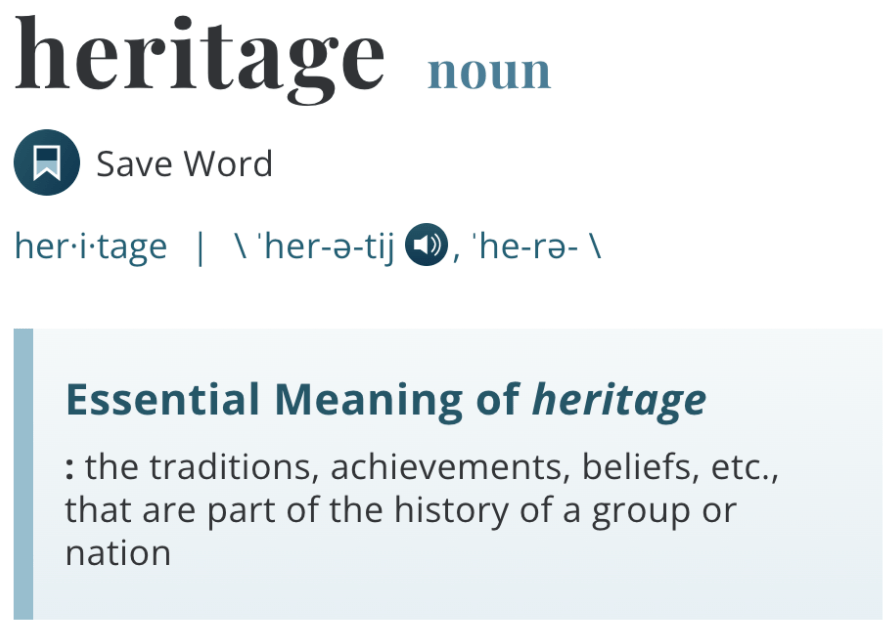
History is important because it can help to build empathy for others by learning about their lives and struggles. The UNIVERSITY of WISCONSIN–MADISON’s Department of History shared beautifully that, “Studying the diversity of human experience helps us appreciate cultures, ideas, and traditions that are not our own – and to recognize them as meaningful products of specific times and places.”
With a clear bias towards what history has been highlighted in the past, these months serve as reminders until we are able to respectfully embrace diverse voices and histories more meaningfully 365 days a year.
February is Black History Month.
Heritage and history months serve multiple purposes (think: celebrate and educate), they are an opportunity to:
- Honour and respectfully celebrate diverse cultures and communities.
- 🍎 FOR EDUCATORS: Liliana Vazquez M.S.,CCC-SLP/L describes how you can respectfully celebrate heritage months: avoid stereotypes, do your research, celebrate these communities, ask someone from the culture).
- Appreciate their achievements and contributions to the Canadian multicultural landscape.
- Amplify diverse voices (and resources).
- Examine the way in which these communities are viewed within Canadian discourse, as well as consider how much diversity there is within these groups (see Statistic Canada’s overview on the Diversity of the Black population in Canada, 2019).
- What does it mean to be a Black Canadian? How diverse is the African diaspora in Canada?
- Educate others about the histories and dynamic challenges of diverse groups.
- Think about how you can honour (and learn more) about your own heritage.
👋🏾 It is critical to recognize the learnings and celebrations highlighted in a single month should happen year round (especially in a country as diverse as Canada). Rather than confining celebrations and education to 30 days, these months should serve as a reminder on how we can continue to learn about others and create a sense of belonging for everyone.
Beyond Black History Month.
As part of my own learning for Black History Month (and beyond), I’ve reached out to Black and non-Black educators within my network to find out their thoughts on the following questions:
- What is the significance of BHM to you?
- What should be the significance of this month for non-Black folks?
- Did you have the opportunity to celebrate this in school/education? How? (Follow up: do you wish you did, and why?)
- How would/have you made sure this is embedded in your teaching/programs (for the month and beyond)?
- What is something you wish people knew about BHM? Other thoughts?
For their openness to sharing, I’d like to voice my gratitude to Adrian Leckie, Marcus Medford, Michelle Cavarretta, and Jennifer Ladipo (in addition to anonymous contributions). I am blessed to have a community of colleagues, friends and family who create space for these conversations.
Check out the takeaways and their insight below:
If you are thinking of doing the same with people in your network, it is important to first have some sort of relationship with mutual trust and respect before asking these questions. It is also important to consider how these conversations can be emotionally draining, and ways you can stay connected other than when you need something.
If you find that you do not have these types of relationships in your network, consider how you can diversify it. In the meantime, you can attend workshops/conferences hosted throughout the month and year, as well as follow more Black folks on social media with the intention of learning.
With gratitude, Abbey.
 ABBEY RAMDEO